


As a continually evolving and growing technology, artificial intelligence (AI) has become more relevant across healthcare systems. Startups are tackling areas ranging from diagnostics to data analysis using the power of AI. According to CB Insights, a market intelligence provider, more than 600 AI-based healthcare startups have raised over 13.2 trillion won ($11 billion) in funding since 2014.
Lunit
The AI-driven software startup Lunit focuses on providing high standard deep learning data-driven medical care services.
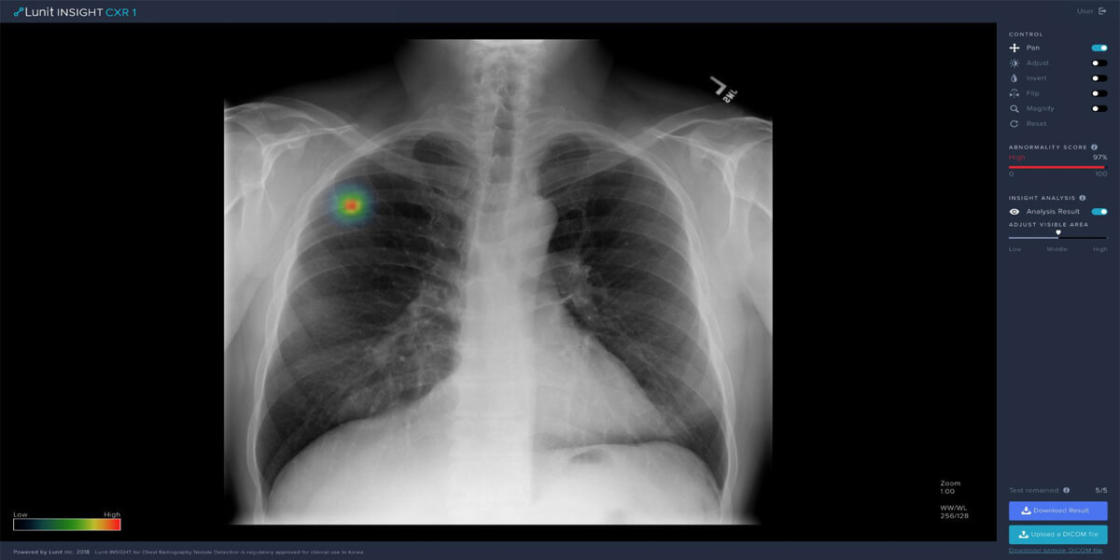
Founded in 2013, the company devoted to designing and developing AI-powered imaging biomarkers with high efficiency and accuracy in diagnosis and therapeutics of diseases, especially cancer.
In 2018, Lunit launched its web-based AI medical image diagnostic software “Lunit Insight CXR-Nodule” capable of delivering accurate diagnostics for lung abnormalities such as cancer. Currently, the startup provides the flagship product to South Korea and outside countries such as Italy, Portugal, Brazil, and Indonesia to detect lung aberrations caused by the COVID-19 disease.
Anthony Paek, Co-Founder of Lunit, said that Data-driven medicine using deep-learning technology analyzes and accurately detects diseases better than humans, saving time and lives.
Lunit recently launched the Lunit Insight for Mammography (Lunit MMG), its latest software for breast cancer detection.
Vuno
Founded in 2014, Vuno is an AI-driven medical startup that develops products and systems that offer medical data analysis consulting services. The startup provides AI-based medical solutions for patients and doctors.

The startup created a classification software named the VUNO DTAS (Deep Triage and Acuity Scale) that could help medical staff assess visiting patients’ emergency. Meanwhile, its Deep Learning-based Early Warning System (DEWS) could predict within 24 hours, the risk of a hospitalized patient having a cardiac arrest.
Additionally, Vuno developed the first AI-powered image diagnostics device in Korea called the VUNOmed-BoneAge. The medical device could instantly determine the skeletal age of a person using a deep-learning engine capable of analyzing an X-ray scan of a person’s left hand.
In the effort to help fight against the coronavirus pandemic, Vuno offered for free its AI solution services that could read lung scan images, identifying abnormalities. The company released its VUNO Med-Chest X-ray and VUNO Med-LungQuant for COVID-19 as cloud-based web services through its website.
Standigm

The Korean startup Standigm uses cutting-edge AI technology for drug discovery and development. A team of experts specializing in AI, biology, systems engineering, and chemistry to build an AI model for the pharmaceutical industry. The company focuses on speeding up the discovery of new medicines and predicting new indications for existing drugs.
In an investment round, Standigm raised 18 billion won ($15 million) from investors, including Kakao Ventures, LB Investment, and Mirae Asset Venture Investment, which would fund the scaling of its AI-based platform.
Jinhan Kim, Standigm’s CEO, said that their strong reputation would help them create partnerships with leading healthcare organizations, further accelerating the growth of their pipelines.
Through drug repositioning using a deep-learning AI platform, the pharmaceutical startup generated tens of drugs candidates for autism, Parkinson’s disease (PD), fatty liver diseases (NASH), cancer, and more.
Nunaps
Nunaps is a digital therapeutics startup that developed a treatment platform related to neurological disorders. Its first product, Nunap Vision, provides visual perception training using a VR headset to remedy visual field defects resulting from brain damage.

In a series A funding round, Nunaps raised over 5 billion won ($4.2 million) from Korean venture capitals, including K2 Investment Partners, KTB Network, and Company K Partners.
In 2019, Nunap Vision acquired approval from the Ministry of Food and Drug Safety, a first for a digital therapeutics trial. Nunap Vision is a Software as a Medical Device (SaMD) employing HMD. The startup consists of medical and tech experts, including neurologists, AI scientists, software and game/VR developers, and perceptual psychologists.
Founder and CEO Dong-Wha Kang said that Nunaps aims to become a global top-tier digital therapeutics company with patient-centered product R&D.
SkyLabs
SkyLabs, a health-tech startup, developed a wearable cardio tracker named CART. The smart ring-type medical device helps to continuously monitor atrial fibrillation (AFib), a form of heart problem that causes irregular heart rhythm.
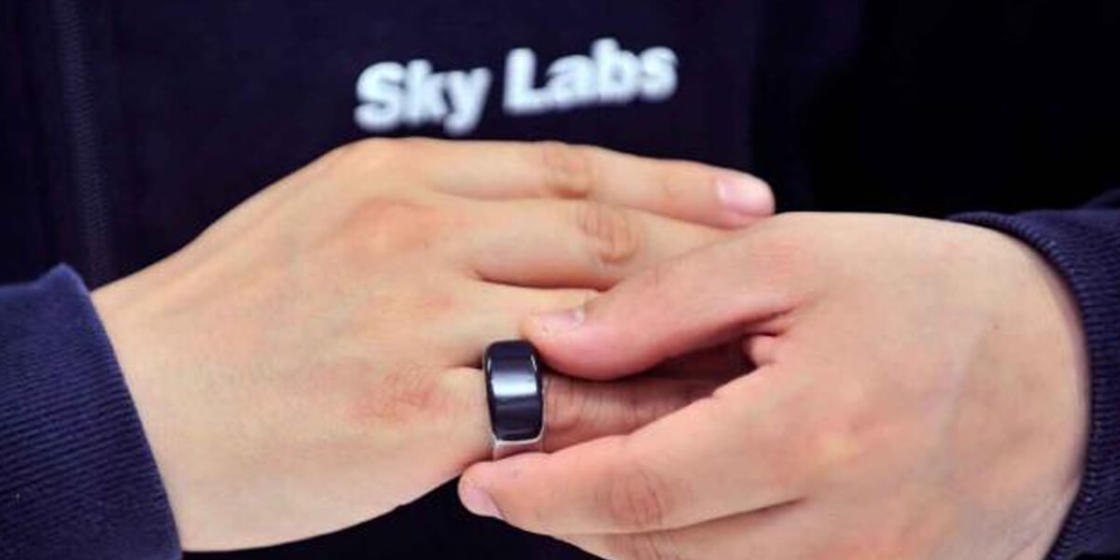
In 2019, SkyLabs announced a joint survey with the Atrial Fibrillation Association (AFA), which showed high product interest from more than 80 percent of the respondents. Patients diagnosed with atrial fibrillation said that they want to wear the device to help them diagnose and monitor their heart disease.
AFib occurs in 25% of people aged 40 or older. As the CART ring is both dust-proof and waterproof, users could wear the device daily. Additionally, collected data from the devices could help doctors diagnose atrial fibrillation.