KoreaTechToday - Korea's Leading Tech and Startup Media Platform
  • Topics
    • Naver
    • Kakao
    • Nexon
    • Netmarble
    • NCsoft
    • Samsung
    • Hyundai
    • SKT
    • LG
    • KT
    • Retail
    • Startup
    • Blockchain
    • government
  • Lists
KoreaTechToday - Korea's Leading Tech and Startup Media Platform
  • Topics
    • Naver
    • Kakao
    • Nexon
    • Netmarble
    • NCsoft
    • Samsung
    • Hyundai
    • SKT
    • LG
    • KT
    • Retail
    • Startup
    • Blockchain
    • government
  • Lists
KoreaTechToday - Korea's Leading Tech and Startup Media Platform
No Result
View All Result
Home KAIST

KAIST Researchers Develop Highly Reusable Mask Filter

James Jung by James Jung
PUBLISHED: March 17, 2020 UPDATED: March 18, 2020
in KAIST, Medical, Ministry of Food and Drug Safety, South Korea
0
kaist-develop-face-mask
South Korean scientists from the Korea Advanced Institute of Science and Technology (KAIST) developed a reusable mask which could retain its efficiency even after multiple washing and use. / photo courtesy of KAIST

South Korean scientists from the Korea Advanced Institute of Science and Technology (KAIST) developed a reusable mask which could retain its efficiency even after multiple washing and use. / photo courtesy of KAIST

A team of South Korean scientists from the Korea Advanced Institute of Science and Technology (KAIST) announced Monday that the institute developed a reusable mask which could retain its efficiency even after multiple washing and use.

The team of researchers led by Kim Il-doo developed a nanofiber filter for face masks using an “Insulated Block Electrospinning (IBE)” method. The IBE method allows nanofibers to intersect or align at right angles in a cross-shaped pattern.

As the country struggles with a supply shortage of protective masks, researchers paid much attention to whether the new mask filter can withstand repeated use. The spread of coronavirus has made medical supplies, such as face masks, scarce for medical personnel.

The existing and widely used filters are melt-blown and non-woven with randomly intertwined fibers and varying pore sizes. The structure requires multiple overlaid screens to block even small particles. Also, the efficiency of the filters decreases considerably when washed or worn numerous times.

The new filter developed in KAIST can be placed inside regular cotton masks. The protective material, made from finely crossed nanofabric contain smaller and equally spaced air holes. The method allows for a better blocking efficiency with less thickness than conventional filters.

New Mask Filter

The newly developed masks are also airy and make it easier to breathe. Even after multiple usage and 20 times of washing with soap or ethanol, the filters maintain their structural integrity.

Additionally, the mask withstood folding for more than 4,000 times and still retain its KF80 grade protective qualities.

The nanofabric filters can be applied in medium level KF80 masks and high-grade N95 respirators that are highly sought by medical personnel.

The development team also created cotton masks that can utilize reusable filters.

KAIST Professor Kim Il-doo, said at present, that they could produce a filter sheet 35 centimeters wide and 7 meters long in an hour. He said that with the method, they could manufacture an average of 1,500 reusable mask filters per day at their lab.

Kim also hopes to get approval from the Ministry of Food and Drug Safety to ramp up the production capability.


Tags: coronavirusface maskfiltersKAISTmasksnanofabricresearcherreusableSouth Korea

Related Posts

Chazm Operator Wins Scale-up TIPS Selection to Expand Automotive Finance AI
South Korean scientists from the Korea Advanced Institute of Science and Technology (KAIST) developed a reusable mask which could retain its efficiency even after multiple washing and use. / photo courtesy of KAIST
AI

Chazm Operator Wins Scale-up TIPS Selection to Expand Automotive Finance AI

November 4, 2026
The Strategic Investment Trap: What Korean Startup Founders Should Consider Before Taking Corporate VC
South Korean scientists from the Korea Advanced Institute of Science and Technology (KAIST) developed a reusable mask which could retain its efficiency even after multiple washing and use. / photo courtesy of KAIST
AI

The Strategic Investment Trap: What Korean Startup Founders Should Consider Before Taking Corporate VC

November 1, 2026
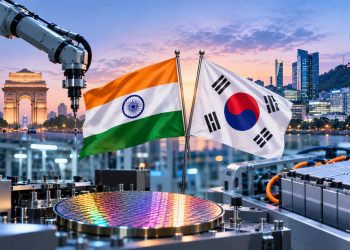
India and South Korea Could Build a New Startup Corridor Around Manufacturing and Technology
South Korean scientists from the Korea Advanced Institute of Science and Technology (KAIST) developed a reusable mask which could retain its efficiency even after multiple washing and use. / photo courtesy of KAIST
South Korea

India and South Korea Could Build a New Startup Corridor Around Manufacturing and Technology

November 1, 2026
Why South Korea Could Become a Strategic Growth Partner for Southeast Asian Startups
South Korean scientists from the Korea Advanced Institute of Science and Technology (KAIST) developed a reusable mask which could retain its efficiency even after multiple washing and use. / photo courtesy of KAIST
South Korea

Why South Korea Could Become a Strategic Growth Partner for Southeast Asian Startups

November 1, 2026
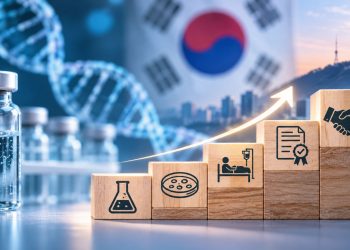
From Lab Results to Licensing Deals: What Korean Biotech Startups Must Prove to Raise Capital
South Korean scientists from the Korea Advanced Institute of Science and Technology (KAIST) developed a reusable mask which could retain its efficiency even after multiple washing and use. / photo courtesy of KAIST
Biotech

From Lab Results to Licensing Deals: What Korean Biotech Startups Must Prove to Raise Capital

November 1, 2026
Korean Investors Need a Strategic Approach to Southeast Asia, Not Just More Capital
South Korean scientists from the Korea Advanced Institute of Science and Technology (KAIST) developed a reusable mask which could retain its efficiency even after multiple washing and use. / photo courtesy of KAIST
AI

Korean Investors Need a Strategic Approach to Southeast Asia, Not Just More Capital

November 1, 2026
No Result
View All Result

Most Popular

  • FTC Imposes 72.4 Billion Won Fine on Kakao Mobility Over Antitrust Violations

    0 shares
    Share 0 Tweet 0
  • The Strategic Investment Trap: What Korean Startup Founders Should Consider Before Taking Corporate VC

    0 shares
    Share 0 Tweet 0
  • Kakao Mobility CEO indicted as prosecutors probe alleged abuse of market dominance

    0 shares
    Share 0 Tweet 0
  • Samsung and SK Hynix Face New U.S. Licensing Rules for Chinese Chip Plants

    0 shares
    Share 0 Tweet 0
  • Kakao Taps Top Korean Universities for AI Strategy Through ‘Kanana Scholar’ Program

    0 shares
    Share 0 Tweet 0
  • South Korea’s K-Startup Grand Challenge Returns for 10th Year, Expands Industry Partnerships and PoC Opportunities

    0 shares
    Share 0 Tweet 0

PRODUCTS

[ads_amazon]

TOPICS

  • Naver
  • Kakao
  • Nexon
  • Netmarble
  • NCsoft
  • Samsung
  • Hyundai

FREE NEWSLETTER

[mc4wp_form id="4726"]

FOLLOW US

  • About Us
  • Cookie policy
  • home
  • homepage
  • mainhome
  • Our Services
  • Privacy Policy
  • Terms of Use

Copyright © 2024 KoreaTechToday | About Us | Terms of Use |Privacy Policy |Cookie Policy| Contact : [email protected] |

No Result
View All Result
  • Topics
    • Naver
    • Kakao
    • Nexon
    • Netmarble
    • NCsoft
    • Samsung
    • Hyundai
    • SKT
    • LG
    • KT
    • Retail
    • Startup
    • Blockchain
    • government
  • Lists

Copyright © 2024 KoreaTechToday | About Us | Terms of Use |Privacy Policy |Cookie Policy| Contact : [email protected] |