
KoreaTechToday - Korea's Leading Tech and Startup Media Platform
  • Topics
    • Naver
    • Kakao
    • Nexon
    • Netmarble
    • NCsoft
    • Samsung
    • Hyundai
    • SKT
    • LG
    • KT
    • Retail
    • Startup
    • Blockchain
    • government
  • Lists
KoreaTechToday - Korea's Leading Tech and Startup Media Platform
  • Topics
    • Naver
    • Kakao
    • Nexon
    • Netmarble
    • NCsoft
    • Samsung
    • Hyundai
    • SKT
    • LG
    • KT
    • Retail
    • Startup
    • Blockchain
    • government
  • Lists
KoreaTechToday - Korea's Leading Tech and Startup Media Platform
No Result
View All Result
Home Battery

LG Chem Test Flight UAV with Lithium-sulfur Battery, Sets Record

James Jung by James Jung
PUBLISHED: September 11, 2020 UPDATED: September 12, 2020
in Battery, Drone, LG Chem, South Korea
0
LG Chem accomplished a test flight of Korea Aerospace Research Institute's unmanned aerial vehicle (UAV) EAV-3 powered by lithium-sulfur (Li-S) battery.
LG Chem accomplished a test flight of Korea Aerospace Research Institute's unmanned aerial vehicle (UAV) EAV-3 powered by lithium-sulfur (Li-S) battery. / photo courtesy pf LG Chem

LG Chem accomplished a test flight of Korea Aerospace Research Institute's unmanned aerial vehicle (UAV) EAV-3 powered by lithium-sulfur (Li-S) battery. / photo courtesy pf LG Chem

LG Chem announced on Thursday that it accomplished a test flight of Korea Aerospace Research Institute’s (KARI) unmanned aerial vehicle (UAV) EAV-3 powered by the South Korean battery maker’s next-generation lithium-sulfur (Li-S) battery technology.

KARI’s unmanned aerial vehicle, called the EAV-3, flew in the stratosphere using LG Chem’s next-generation lithium-sulfur battery. The EAV-3 achieved an altitude of 22 kilometers (14 miles) above sea level, breaking South Korea’s highest recorded flight for a UAV.

The aerial vehicle wings span 20 meters (65 feet) with a fuselage length measuring 9 meters (30 feet). The UAV weighs around 21 kilograms (46 pounds) and works typically using eco-friendly energy sources such as solar power and lithium-ion batteries.

KARI performed the test flight in its Goheung aviation facility last August 30, where the EAV-3 flew for a total flight time of 13 hours. LG Chem said that the UAV stably operated for seven hours at an altitude between 12 and 22 kilometers (8 and 14 miles) above sea level.
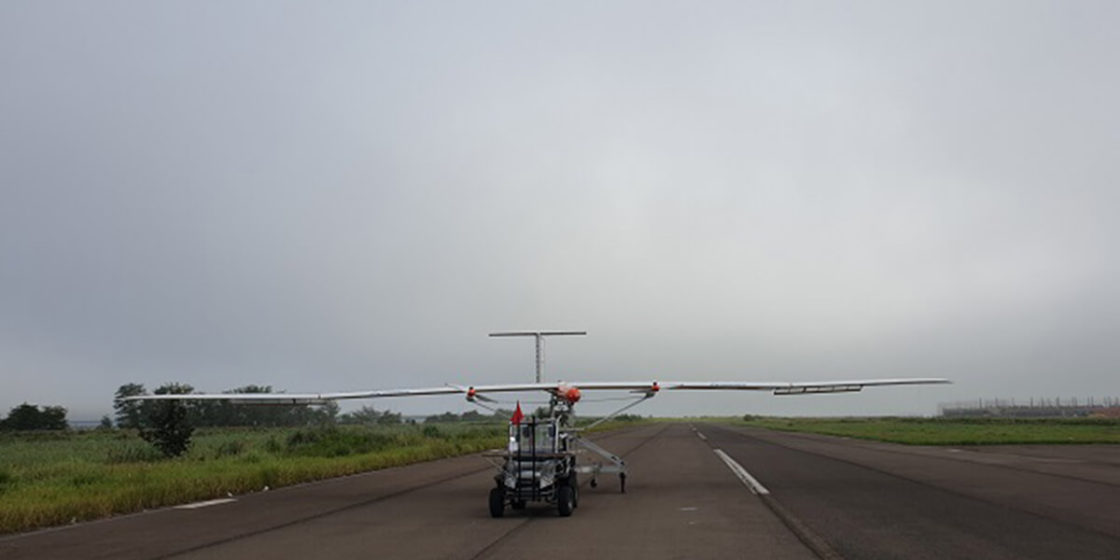
Korea Aerospace Research Institute's UAV with LG Chem's lithium-sulfur battery. (LG Chem)
Korea Aerospace Research Institute’s UAV with LG Chem’s lithium-sulfur battery. (LG Chem)

LG Chem prepared for the test flight for 18 months, using a simulated environment that imitated stratospheric environmental conditions. The testing period allowed the company to find the best solution to increase the Li-S’ performance in actual flight.

Lithium-Sulfur Battery: Next-Generation Battery

The lithium-sulfur battery functioned well in minus 70 degrees Celsius and at an atmospheric pressure 1/25th compared to ground level.

LG Chem said that the test flight proved that lithium-sulfur batteries provided stable charging and discharging in extreme conditions. The Li-S battery contains a higher density that is 1.5 times higher than a lithium-ion battery. The batteries also weigh lighter with lower prices against existing lithium-ion batteries since it does not utilize rare metal resources.

Lithium-sulfur batteries replace the cathode material with sulfur compared to lithium-ion batteries with magnesium, cobalt, and nickel composition. According to LG Chem, this allows the batteries to have a lighter weight, higher density, and lower cost.

LG Chem expects that the Li-S batteries could power a wide range of mobility platforms such as electric vehicles, aircraft, and long-range drones. The company plans to begin mass-production of the next-generation batteries by 2025.

Tags: batterydroneEAV-3KARILG chemLithium-sulfur batterytest flightUAV

Related Posts

Why Seoul’s Beauty Experts Are Becoming Part of AI Systems
LG Chem accomplished a test flight of Korea Aerospace Research Institute's unmanned aerial vehicle (UAV) EAV-3 powered by lithium-sulfur (Li-S) battery. / photo courtesy pf LG Chem
beautytech

Why Seoul’s Beauty Experts Are Becoming Part of AI Systems

July 31, 2026
Gamescom Signals South Korea’s Next Phase in Global Gaming as Studios Expand Beyond Traditional Strengths
LG Chem accomplished a test flight of Korea Aerospace Research Institute's unmanned aerial vehicle (UAV) EAV-3 powered by lithium-sulfur (Li-S) battery. / photo courtesy pf LG Chem
South Korea

Gamescom Signals South Korea’s Next Phase in Global Gaming as Studios Expand Beyond Traditional Strengths

July 31, 2026
How South Korea Is Quietly Influencing the Future of Digital Commerce Across Asia
LG Chem accomplished a test flight of Korea Aerospace Research Institute's unmanned aerial vehicle (UAV) EAV-3 powered by lithium-sulfur (Li-S) battery. / photo courtesy pf LG Chem
AI

How South Korea Is Quietly Influencing the Future of Digital Commerce Across Asia

August 1, 2026
From Pilots to Production: Why Korean Enterprises Are Leading Asia’s AI Customer Engagement Race
LG Chem accomplished a test flight of Korea Aerospace Research Institute's unmanned aerial vehicle (UAV) EAV-3 powered by lithium-sulfur (Li-S) battery. / photo courtesy pf LG Chem
AI

From Pilots to Production: Why Korean Enterprises Are Leading Asia’s AI Customer Engagement Race

July 29, 2026
South Korea’s Kweather Partners With Flare to Expand Weather Data Into Climate Finance
LG Chem accomplished a test flight of Korea Aerospace Research Institute's unmanned aerial vehicle (UAV) EAV-3 powered by lithium-sulfur (Li-S) battery. / photo courtesy pf LG Chem
AI

South Korea’s Kweather Partners With Flare to Expand Weather Data Into Climate Finance

July 17, 2026
Comment: South Korea’s AI ambitions need more than chips
LG Chem accomplished a test flight of Korea Aerospace Research Institute's unmanned aerial vehicle (UAV) EAV-3 powered by lithium-sulfur (Li-S) battery. / photo courtesy pf LG Chem
AI

Comment: South Korea’s AI ambitions need more than chips

June 30, 2026
No Result
View All Result

Most Popular

  • Kakao Mobility Pilots Korea’s First Robot Valet: A Step Toward Fully Automated Urban Mobility

    0 shares
    Share 0 Tweet 0
  • Why Kakao Is Shutting Down KakaoTV as YouTube Dominates Korea’s Digital Video Market

    0 shares
    Share 0 Tweet 0
  • Samsung SDI Deepens European ESS Push with Tesvolt Agreement

    0 shares
    Share 0 Tweet 0
  • Hyundai Department Store Partners With Mind Cafe to Expand AI-Enabled Workplace Mental Healthcare

    0 shares
    Share 0 Tweet 0
  • Hyundai Elevator Joins Global Climate Action: Plans Carbon Neutrality by 2050

    0 shares
    Share 0 Tweet 0
  • Korea Inc. Comes Home: How Samsung, Hyundai and SK Are Reshaping the Domestic Tech Economy

    0 shares
    Share 0 Tweet 0

PRODUCTS

[ads_amazon]

TOPICS

  • Naver
  • Kakao
  • Nexon
  • Netmarble
  • NCsoft
  • Samsung
  • Hyundai

FREE NEWSLETTER

[mc4wp_form id="4726"]

FOLLOW US

  • About Us
  • Cookie policy
  • home
  • homepage
  • mainhome
  • Our Services
  • Privacy Policy
  • Terms of Use

Copyright © 2024 KoreaTechToday | About Us | Terms of Use |Privacy Policy |Cookie Policy| Contact : [email protected] |

No Result
View All Result
  • Topics
    • Naver
    • Kakao
    • Nexon
    • Netmarble
    • NCsoft
    • Samsung
    • Hyundai
    • SKT
    • LG
    • KT
    • Retail
    • Startup
    • Blockchain
    • government
  • Lists

Copyright © 2024 KoreaTechToday | About Us | Terms of Use |Privacy Policy |Cookie Policy| Contact : [email protected] |